

Most of us think change has to arrive with a bang. A new year, a new notebook, a dramatic Monday morning where we promise to become a completely different person. I have made those promises more times than I can count, and I can tell you how most of them ended: loudly for three days, quietly forgotten by the end of the week. Sounds funny but reality.
Honestly what actually worked for me, and for almost everyone I know who has genuinely improved their life, was far less exciting. It was small stuff. Tiny, almost embarrassingly simple things done every day, until one day you look back and realize you are a different person.
This article is about those habits. Not a rigid system, not a “5 AM millionaire routine,” but ordinary practices that fit into a normal, messy life. If it worked for me, it can work for you too.
Why Small Habits Beat Big Resolutions
Think about how a river carves a canyon. It doesn’t do it with one dramatic flood. It does it with the same water, flowing in the same place, for a very long time. Your habits work the same way, it’s a gradual process not a bang!
When you try to overhaul your whole life at once, you rely on motivation, and motivation is unreliable. It shows up when you’re inspired and disappears when you’re tired, stressed, or busy. A small habit, on the other hand, asks for almost nothing. It’s so easy that you can do it on your worst day.
Think about people who get addicted to something, even when they do not have the resources it takes to keep going, and even when their health may no longer support them in that act, they still find it difficult to quit. That’s the habit they built through constant repetition.
“Don’t get addicted to bad things, but you can build a good habit through constant repetition of good deeds.”
I learned this the hard way. A few years ago I decided I would exercise for an hour every day, wake up at 5 AM, read many pages, meditate, and stop wasting time online, all starting on the same morning. By day four I was exhausted and irritated, and by day six I had quit everything, including the parts that were actually working. It wasn’t a lack of discipline. It was a bad plan.
The lesson: consistency matters more than intensity. Ten minutes every day will beat three hours once a month, every time.

Habit 1: Start Your Morning Without Your Phone
This one sounds simple, but it changed how my days feel more than almost anything else.
For a long time, the first thing I did after waking up was reach for my phone. Messages, social media, news. Within two minutes, I’d already absorbed other people’s problems, opinions, and highlight reels. I hadn’t even brushed my teeth, and I was already feeling behind.
Now I give myself the first twenty to thirty minutes of the day to myself. I drink water, stretch a little, and sit quietly with a cup of tea or coffee. Sometimes I think about what I want to get done. Sometimes I think about nothing at all.
The difference is subtle but real. I start the day feeling like I’m steering instead of being dragged. If that feels impossible, start with just ten minutes. You don’t need to be perfect. You just need to create a small gap between waking up and the noise of the world.
Habit 2: Drink Water Before Anything Else
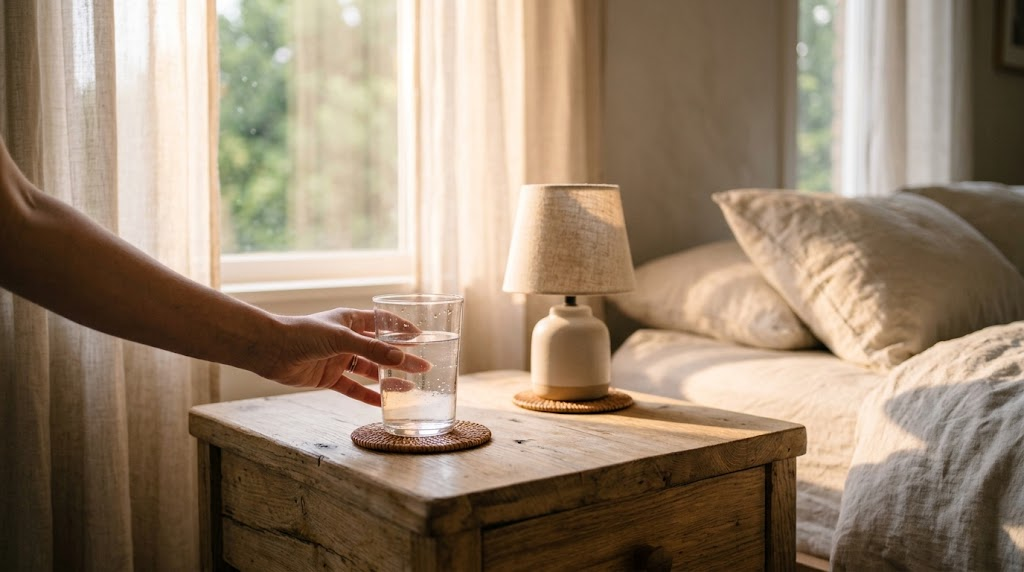
It’s not glamorous advice, but it’s worth saying. Your body goes hours without water while you sleep. Drinking a glass first thing in the morning is one of the simplest ways to treat yourself well.
I loved taking coffee. When my friends saw me with coffee, they thought it was a bit weird because I am slim. But does it really matter? Some even asked, ‘Sir Jerry, what are you doing with coffee?
I used to rely on coffee alone and wondered why I felt foggy by mid-morning. Once I began drinking water first, I noticed I had more steady energy and fewer headaches. I’m not claiming it’s magic, and everyone’s body is different, but it costs nothing and takes thirty seconds. That’s the whole point of a small habit.
A little trick that helped me: keep a bottle or glass of water next to your bed the night before. You remove the friction, so the habit almost does itself.
Habit 3: Write Down Your Top Three Tasks
Have you ever finished a day feeling busy but unsure what you actually accomplished? That happened to me many times due to multi-tasking without planning. Being busy and being productive are not the same thing.
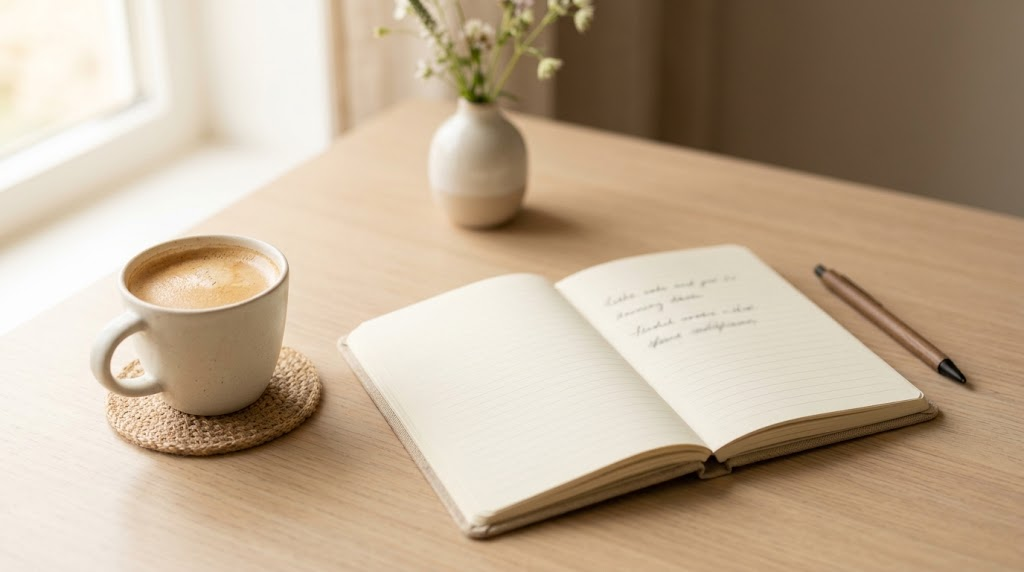
Each morning (or the night before), I write down three things that would make the day a success. Just three. Not twenty. Some days they’re important work tasks, other days they’re as small as “Complete the Landscaping” or “Complete the furniture placement of the layout.”
Having a short list does two things. It stops me from feeling overwhelmed by everything I could do, and it gives me a clear sense of progress when I cross them off. That small feeling of “I did what I said I would do” builds self-trust over time, and self-trust is the foundation of every other change you want to make.
Habit 4: Move Your Body, Even a Little
You don’t need a gym membership or an expensive program. You need to move.
My own relationship with exercise was complicated for years. I treated it as all-or-nothing: either a hard workout or nothing at all. And since hard workouts were hard to schedule, I mostly did nothing.
What changed things was lowering the bar. A few push up in the morning before starting the task of the day. A few stretches before bed. Some squats while waiting for the kettle to boil. These felt too small to matter, but they kept me in motion, and eventually, without forcing it, I wanted to do more.
If you’re starting from zero, aim for a short daily walk. Walking clears your head, improves your mood, and gives you space to think. Some of my best ideas have come on walks without my phone.
Habit 5: Read Ten Pages a Day
Reading is one of those things everyone agrees is valuable and almost no one does enough. The reason is usually time. We imagine reading means sitting down for an hour, and we never have an hour.
But ten pages? That’s about ten to fifteen minutes. Read ten pages every day and you’ll finish roughly twenty-four books in a year, depending on length. That’s a surprising amount of knowledge, perspective, and imagination from a tiny daily investment.
Sometime when i don’t have a book by my side i make researches to fill in that gap, getting new content ideas and knowing what’s trending and trying new ideas. Some nights I read two pages before falling asleep, and that’s fine. The goal isn’t speed. The goal is staying connected to ideas bigger than my daily worries.
Choose books you actually enjoy. Nobody is grading you. If a book bores you after fifty pages, put it down and pick another one.
Habit 6: Practice Gratitude (The Simple Way)
I used to roll my eyes at gratitude advice. It sounded like something printed on a coffee mug. But I tried it during a particularly stressful period, mostly out of desperation, and I was surprised.
Every night, I write down three small things that went well that day. They’re rarely big. A good meal. A friend who made me laugh. A quiet moment of sunshine through the window.
The effect wasn’t instant, but over a few weeks my attention began to shift. I started noticing good things during the day because I knew I’d be writing them down later. Life didn’t become perfect, but I became better at seeing what was already good in it.
Habit 7: Save Something, Anything
Money is a source of stress for so many people, and I understand that deeply. When your income is tight or unpredictable, saving can feel pointless. But the habit matters more than the amount.
Start with something small, even a tiny amount set aside each day or each week. The goal is to build the muscle of paying yourself first. As your situation improves, you can increase it. But if you never start, there’s nothing to grow.
You can begin by saving whatever loose change and small amounts you could spare. It may not seem impressive. But after several months can have a small cushion, and the peace of mind that came with it will be far bigger than the number itself. It’s hard to describe how different you feel when a surprise expense isn’t a total disaster.

Habit 8: Learn Something New for 15 Minutes
Curiosity is a skill, and it fades if you don’t use it. Spending fifteen minutes a day learning something new, whether a language, a skill, a topic you’ve always wondered about, adds up in a way that’s hard to believe until you experience it.
Growth will be far from you if you do not practice this, you will only get to use other peoples ideas when the are already saturated in the market which makes it very competitive. If you are eager to learn new things, you will definitely come across an idea or skill which is not yet saturated.
Think about it: fifteen minutes a day is over ninety hours in a year. That’s enough time to get a solid start in almost anything. Many people who seem “naturally talented” are simply people who kept showing up in small ways for a long time.
Free videos, library books, podcasts, and online courses make this easier than ever. Pick one thing and stay with it for a month before switching.
Habit 9: Tidy One Small Space Each Day
A messy environment drains more energy than we admit. I noticed that on days when my desk was cluttered, my mind felt cluttered too.
You don’t have to clean the whole house. Pick one small area: your desk, a shelf, the kitchen counter. Spend five or ten minutes putting things where they belong. Over time, your space starts to feel calmer, and that calm carries into your thinking.
There’s also a quiet message in it: I respect the place where I live and work. That tiny shift in attitude spills into other parts of life.
Habit 10: Protect Your Sleep
Sleep is the habit that supports every other habit. When I’m well rested, I’m kinder, more focused, and far less likely to make impulsive decisions. When I’m not, everything feels harder.
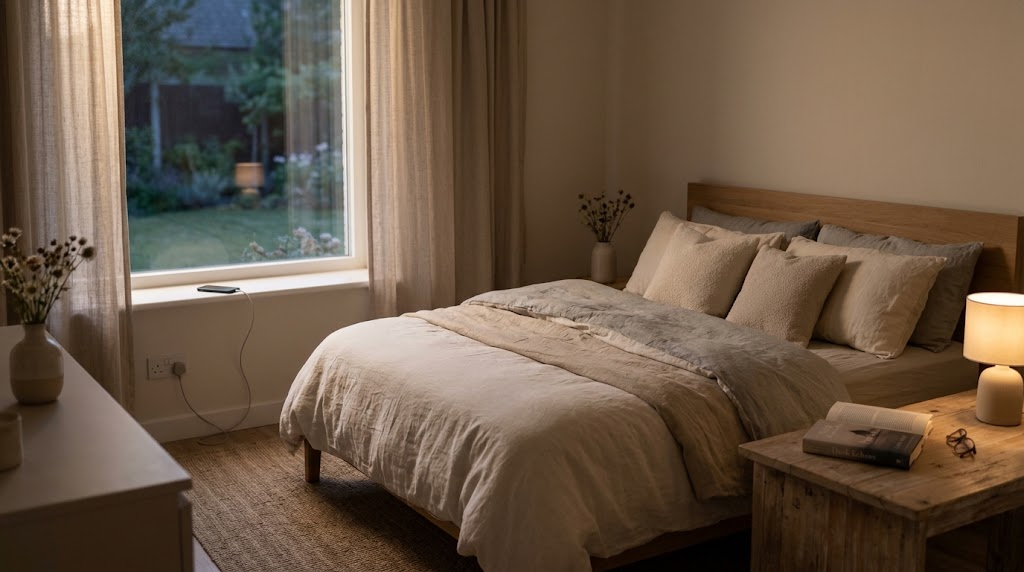
You don’t need a perfect routine. Start with a consistent bedtime, dim the lights an hour before sleeping, and try to put screens away a little earlier than usual. Even small improvements can make mornings noticeably easier.
I used to brag about running on little sleep, as if it were a badge of honor. It wasn’t. It was just making me worse at everything I cared about.
Habit 11: Reflect for Two Minutes Before Bed
At the end of the day, ask yourself two questions: What went well today? and What could I do a little better tomorrow? this question is powerful to shape the next day. if you build a habit of asking yourself this question every single night truth me during the day you will try your best so that you won’t give yourself a negative answer in the night.
This isn’t about self-criticism. It’s about gentle awareness. When you review your day with kindness, you start to notice patterns: what drains you, what energizes you, what you keep avoiding. Small adjustments based on those observations are how real progress happens.
How to Actually Make These Habits Stick
Knowing good habits is easy. Keeping them is the hard part. Here is what I’ve learned from many failed attempts.
Start ridiculously small. If you want to read, read one page. If you want to exercise, put on your shoes. Once you begin, you’ll often do more, but even if you don’t, you’ve kept the streak alive.
Attach new habits to existing ones. Do your gratitude note right after brushing your teeth. Drink water right after you wake up. When a new habit is linked to something you already do, you don’t need to remember it separately.
Focus on one or two habits at a time. This was my biggest mistake early on. Adding too much too fast is the quickest way to burn out. Master one, then add another.
Don’t aim for perfection. You will miss days. Everyone does. What matters is not missing twice in a row. A single slip is a bump. Two becomes a pattern.
Be patient. The results of small habits are almost invisible at first. You won’t wake up one morning feeling transformed. But after a few months, you’ll look back and realize your life feels lighter, steadier, and more yours.
Henceforth be a New Creature
Life rarely changes in dramatic moments. It changes in ordinary ones: the glass of water, the ten-minute walk, the page you read when you were tired, the choice to put the phone down. These actions feel too small to matter, and that’s exactly why most people ignore them.
But small things, repeated, are powerful. They shape how you think, how you feel, and who you become.
So don’t wait for a perfect moment or a dramatic new beginning. Pick one habit from this list, the easiest one, and start today. Do it again tomorrow. Let it be boring. Let it be small.
A year from now, you’ll be glad you started.
Check out this amazing topic The Art of Balancing Function and Style
For house design inspirations visit Jerry House Design