

As we all know, confidence is essential in our daily life—but how often do we actually stop to think about where it comes from?
There’s a quiet moment that many of us know too well. You’re scrolling through your phone late at night, and someone you went to school with has just announced a promotion. Another one is buying a house. A third is traveling, launching a business, or posting about how their life is finally coming together.
As you lay the phone down and glance upward, a heavy question settles into the silence: Why am I still in this exact spot? What’s wrong with me?
If you’ve felt that, I want you to know something right away: you are not alone, and you are not broken. Feeling behind is one of the most common human experiences, and it rarely says as much about you as it feels like it does.
I’ve carried that feeling for long stretches of my life, and what I’ve learned is that confidence is not something reserved for people who have it all figured out. It’s something you can build slowly, honestly, and in small steps, even when you feel like you’re starting late. This article is about how.
Why So Many of Us Feel Behind
Before we talk about solutions, it helps to understand where this feeling comes from. When you understand why it shows up, it loses some of its power.
1. We compare our behind-the-scenes to everyone else highlights
Social media shows us the best moments of other people’s lives: the achievements, the celebrations, the clean and photogenic versions of reality. It rarely shows the doubt, the debt, the failed attempts, or the sleepless nights behind them.
I once spent a whole evening feeling terrible about a friend’s success, only to hear weeks later that she had been struggling with anxiety the entire time she was posting those cheerful updates. What I was comparing myself to wasn’t real life. It was a carefully chosen slice of it.
Understanding what leads to lost of confidence will help you rebuild your confidence back.

2. We believe in a universal timeline
Somewhere along the way, many of us absorbed an invisible schedule: finish school by a certain age, get a stable job by another, be married, own property, be successful, all by a deadline no one can actually name. When our lives don’t match, we feel like we’ve failed.
But that timeline is an illusion. People bloom at wildly different ages. Some find their path at twenty, others at forty-five, and some change direction several times. There is no official clock, only the one we’ve been trained to believe in.
We are actually live with a mindset others have built inside us, but the fact remains there is no blueprint of a certain age to whatever achievement in life. Slow down, you’re not late neither are left behind.
3. Our circumstances really are different
Sometimes we are behind, in the sense that we started with- fewer resources, less support, or more responsibility than others. Perhaps you had to work while studying, take care of family, or deal with health problems or financial strain. Comparing your progress to someone who had a smoother start isn’t fair to you.
Acknowledging this isn’t making excuses. It’s being honest about your starting point, which is the first step toward moving forward from it.
Comparison has a big negative effect in your life, it drains your happiness, leads to low self-esteem, it’s psychological effect disrupt your growth.
Think of it, How many times have you compared your obstacles and your responsibilities to that of others? Of course you won’t compare that you only get to compare their achievements with yours not mind where you started and where they started.
Your statistics are wrong when you do not have a complete data of the resources they started with, the responsibilities tied to them, the obstacles and challenges the have faced. You only see results, so what makes you think you’re worst than them when you don’t have a comprehensive data of their life.
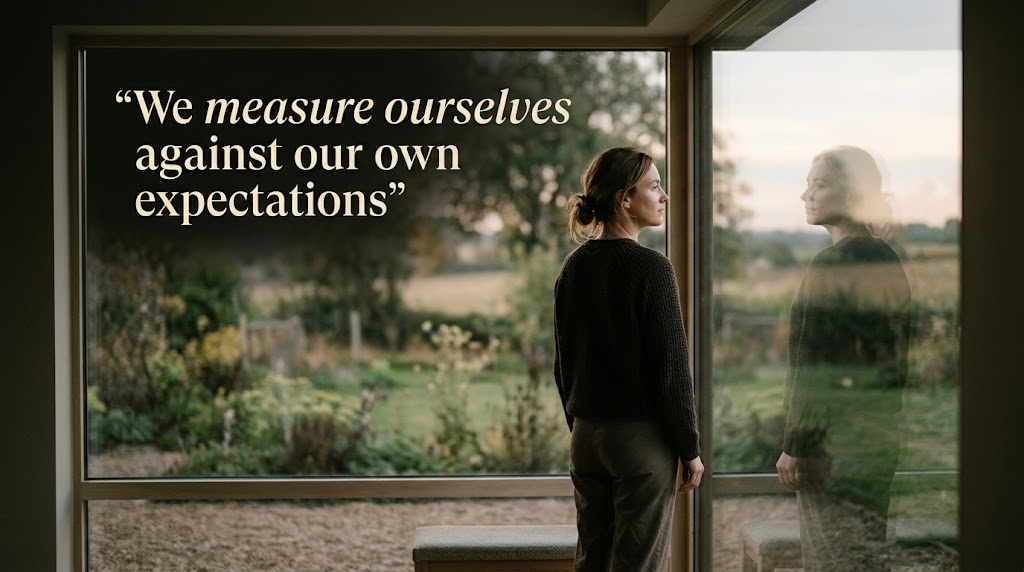
4. Measuring ourselves against our own expectations kills Confidence
Often the person we feel behind is not someone else but the version of ourselves we imagined. “By now I should have been further.” That imagined version has no obstacles, no bad luck, and no learning curve, so no real person can compete with them.
That imaginary person you feel you should have become is just a shadow of you, and no one has ever been faster than their shadow. Slow down with your expectations, you are not left behind. Don’t let your expectations make you feel inferior
A Personal Story About Feeling Behind
There was a time when I felt hopelessly stuck. Many people around me seemed to be moving forward with confidence, and I felt like I was standing still while everyone else rode past on a fast train. I avoided conversations about work because I didn’t want to explain where I was. Turned down invitations. I told myself I’d rejoin everyone once I had something impressive to show.
The problem was that the more I hid, the worse I felt. Confidence doesn’t grow in isolation. And waiting to feel “good enough” before acting only kept me frozen.
What changed things wasn’t a dramatic breakthrough. A person I respected said something simple to me one day: “Nobody is paying as much attention to your timeline as you are.” That sentence loosened something in me. I realized I’d been competing in a race no one had actually entered me in.
I started small. Picked one skill to improve, practiced it for a few minutes each day, and stopped announcing big plans. Over a few months, I noticed something surprising: my confidence grew not from big wins but from the accumulation of small proofs that I could follow through. If I could achieve it you too can, you just have to believe in yourself.
How to Build Confidence When You Feel Behind
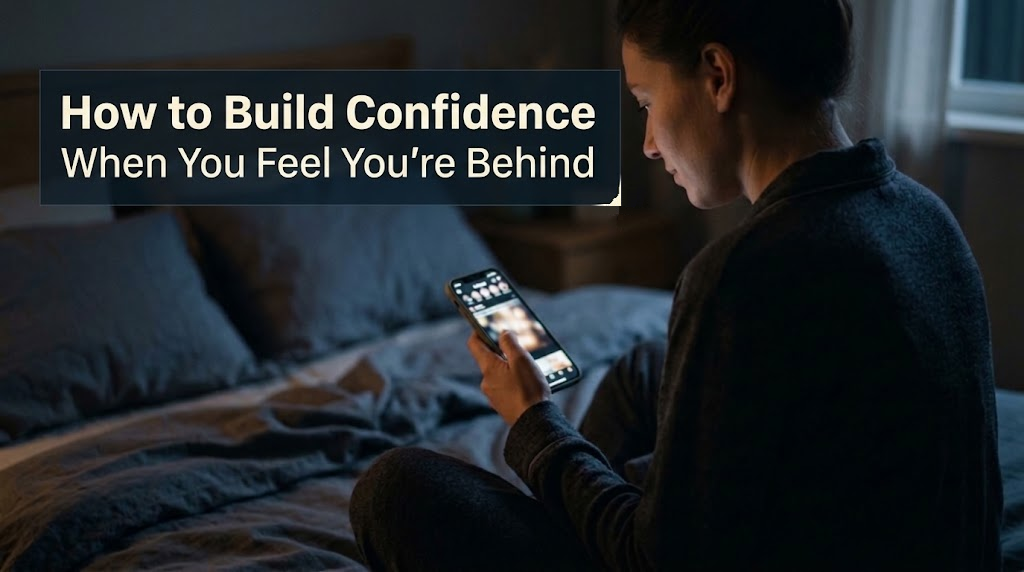
1. Stop comparing, or at least change what you compare
You’ll probably never completely stop comparing, because it’s human. But you can change the comparison. Instead of measuring yourself against other people, compare yourself with who you were six months ago.
Ask: What do I know now that I didn’t then? What can I do that was difficult before? What have I survived and what have I achieved? This kind of comparison is fair and tells you the truth about your growth.
A practical step: limit the time you spend on platforms that leave you feeling worse. Unfollowing or muting accounts that trigger constant comparison is not weakness. It’s protecting your mind and protecting your mind is building your peace which gives room for growth.
A disorganized mind will never find it easy to grow; mistakes start to be the order of the day when your mind is disorganized by comparison.
2. Defining success on your own terms build your confidence
If you’ve never stopped to define what “ahead” means to you, you may be chasing someone else version. Take some quiet time and ask yourself: What do I actually want? What kind of life would feel good to me, not just look good to others?
“Don’t live your life in a mindset someone else has built for you; live in your own definition”
For some people, success means a high-paying career. For others, it’s time with family, creative freedom, peace of mind, or good health. When you know what you’re aiming for, other people’s milestones become less threatening, because they are not your milestones.
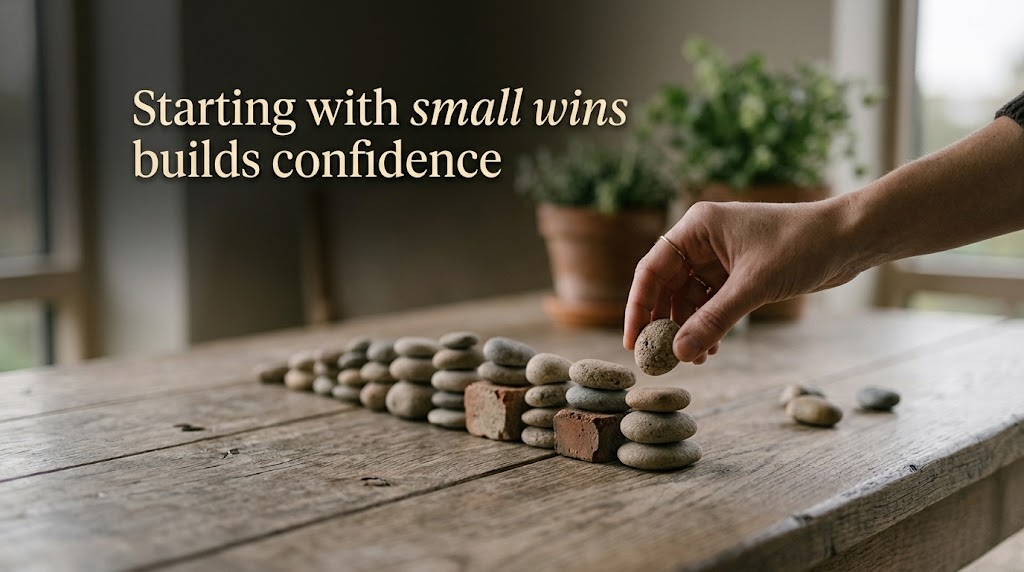
3. Starting with small wins builds confidence
Confidence is built on evidence. When you keep promises to yourself, even tiny ones, you create proof that you can be trusted. Over time, that proof turns into a deep sense of self-belief.
Choose something small and achievable: a ten-minute walk, one page of studying, one task you’ve been avoiding. Complete it, and notice that you did what you said you would do. Then repeat tomorrow.
I used to dismiss small wins because they seemed too minor to matter. But I’ve come to see them as bricks. No single brick looks impressive, but a wall is made entirely of them. This is not poet, it’s reality learn from it and build your life and confidence.
4. Learning one thing at a time builds confidence
When you feel behind, it’s tempting to try to catch up on everything at once. You sign up for five courses, buy three books, and make a plan to overhaul your life by next month. This usually leads to exhaustion and more disappointment.
Pick one skill or area that would make the biggest difference and focus on it. Give it consistent attention for a few months. Depth builds confidence more than scattered effort does. Like I said earlier results builds confidence so focus on one at a time do not over task yourself to avoid losing all.

5. Practice self-compassion to build Confidence
Many of us speak to ourselves in ways we’d never speak to a friend. “You’re so slow. You’ve wasted so much time. What’s wrong with you?” That inner voice doesn’t motivate. It drains. Change the way you sound to yourself.
Try this experiment: when you catch yourself being harsh, imagine a close friend saying the same thing about their own life. What would you tell them? You’d probably say something kind, realistic, and encouraging. Offer yourself that same voice.
Self-compassion isn’t about excusing laziness. Research and everyday experience both suggest that people who treat themselves kindly are more likely to try again after setbacks, because failure feels less like a verdict. Don’t joke with self-compassion it helps build your confidence.
6. Take care of the basics
It’s hard to feel confident when you’re exhausted, undernourished, or constantly stressed. Sometimes low confidence is partly a physical problem. Sleep, simple movement, regular meals, and time outdoors may seem too basic to matter, but they shape how you think and feel about yourself.
When I started sleeping better and taking short daily walks, nothing about my circumstances had changed yet, but my mind felt steadier. Problems seemed more manageable. Confidence often returns when your body feels supported.
7. Be honest about gaps, then work on them
Confidence doesn’t mean pretending you have no weaknesses. In fact, honest self-awareness is a powerful form of confidence. If you feel behind in a particular skill, admit it plainly: “I don’t know this yet.” Then make a plan to learn it.
There’s a surprising relief in no longer hiding the gap. Once I admitted aloud that I was a beginner at something, I found people were far more willing to help than to judge.
8. Surround yourself with supportive people
The people around you affect how you see yourself. If you’re surrounded by constant criticism or competition, your confidence will suffer. Look for friends, mentors, or communities that encourage growth and speak honestly without tearing you down.
It also helps to talk openly about how you feel. When I finally told a trusted friend that I felt behind, she admitted she felt exactly the same way. Two people who each believed they were alone had been quietly struggling in parallel. Sharing that took away a great deal of the shame.
9. Celebrate progress, however small
Many of us are quick to notice what we haven’t done and slow to acknowledge what we have. Make a habit of recognizing your progress. At the end of each week, write down three things you handled, learned, or improved.
This isn’t about arrogance. It’s about balancing a mind that tends to focus on the negative. Over time, that list becomes a record you can look back on when doubt creeps in.
10. Take action before you feel ready
This is one of the most important lessons I’ve learned. We often wait to feel confident before taking action, but it usually works the other way around. Confidence is a result of action, not a requirement for it.
Apply for the job even if you meet only part of the requirements. Share your work even if it isn’t perfect. Ask the question even if you worry it sounds basic. Each time you act despite fear, you teach yourself that you can handle uncertainty.
11. Redefine failure
When you feel behind, failure can seem especially frightening, as though one more mistake will confirm your worst fears. But failure is information, not a final judgment. Every person you admire has made mistakes, often many more than you’d guess.
Try asking, “What did this teach me?” instead of “What does this say about me?” That small shift turns setbacks into material for growth.
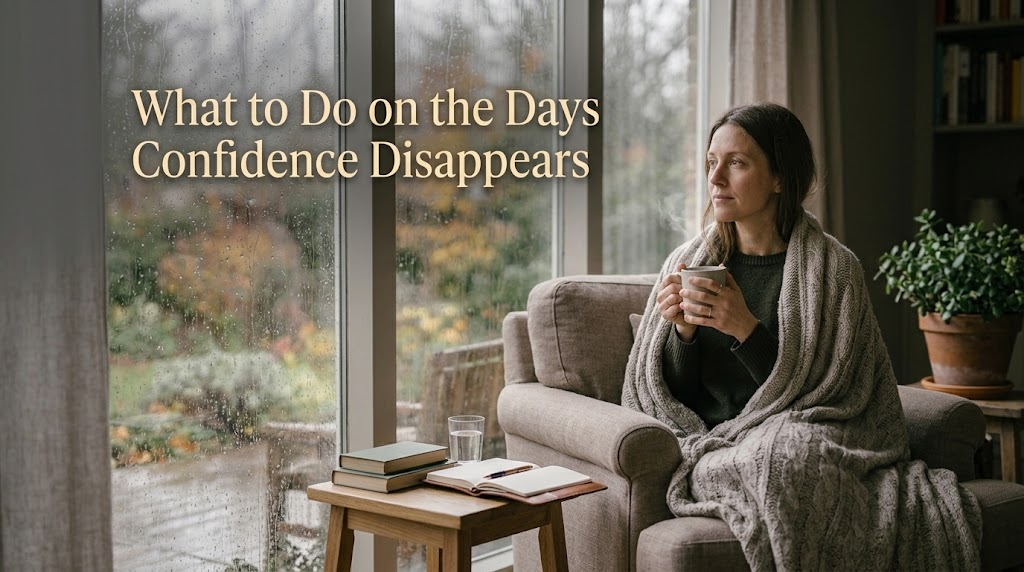
What to Do on the Days Confidence Disappears
Even after you’ve started building confidence, there will be days when old doubts return. That’s normal. Here’s what helps me.
Return to the basics. Do one small, easy task. Washing the dishes or answering one message can restore a sense of control.
Remember your history. Think of a time you faced something difficult and got through it. You’ve handled hard things before.
Limit the scrolling. If you notice comparison creeping in, put the phone away for a while.
Talk to someone. A short, honest conversation can shift your perspective more than hours of thinking alone.
Rest without guilt. Sometimes feeling behind is partly a signal that you’re worn out, and what you need is rest, not more pressure.
A Gentle Exercise to Try This Week
Take a piece of paper and divide it into two columns. In the first, write down everything you feel behind in. Be honest, nothing is too small or embarrassing. In the second column, next to each item, write one tiny action you could take this week to move forward.
You might notice that some items don’t really matter to you and are just borrowed expectations. Cross those out. For the ones that do matter, pick just one action and do it. That small act of moving from worry to action is where confidence begins to grow.
My final words to you on building Confidence
Feeling behind is painful, but it doesn’t have to define you. The race you think you’re losing is often one that exists mostly in your imagination and in the comparisons your mind keeps making. Real life is not a straight line, and no one gets a perfect map.
Confidence isn’t a personality trait you either have or don’t. It’s a skill you build through honest effort, patience, and kindness toward yourself. Each small step, each kept promise, each moment of showing up despite doubt becomes part of a foundation that no one can take away.
So be gentle with yourself. You may not be where you hoped to be, but you are not stuck unless you stop moving. Take the next small step, then the next one. In time, you may look back and realize you were never as far behind as you feared, only on a path that was uniquely yours.
Check out this amazing topic:
Why does motivation disappear when you need it most?
For house design inspirations visit Jerry House Design