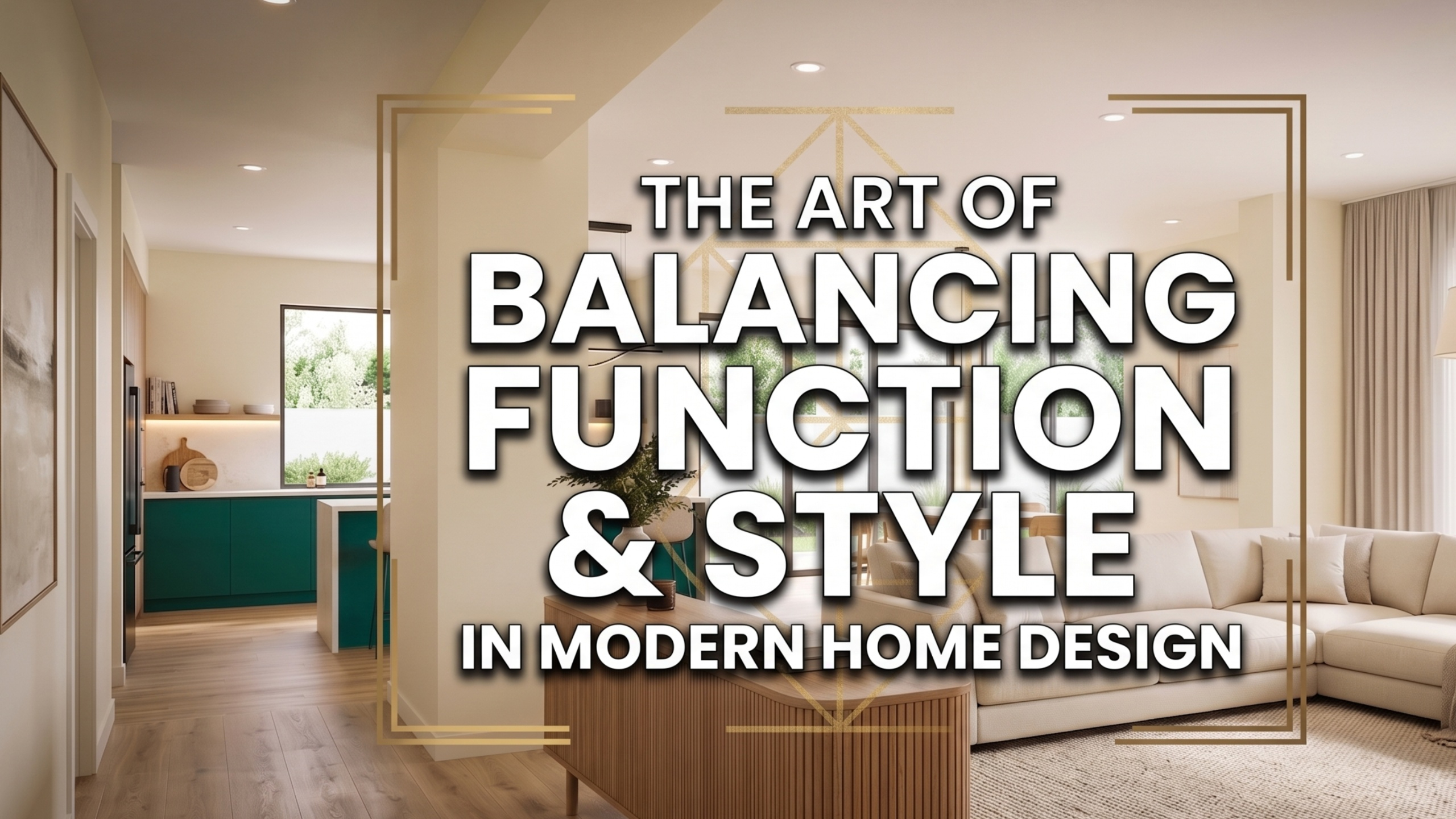

The Art of Balancing Function and Style in Modern Home Design
We have all seen them on social media: breathtaking, minimalist living rooms with towering glass walls, pristine white boucle sofas, and not a single power outlet, trash can, or storage bin in sight. They are masterpieces of visual styling. Yet, anyone who has ever lived in a real home knows the immediate question that arises: Where do they keep their shoes? Where does the mail go? What happens when someone spills coffee?
For decades, design enthusiasts have wrestled with the classic architectural debate: Form versus Function. Should a home be designed primarily around how it looks (form), or how it works (function)?
The truth is, the most successful residential spaces do not force you to choose. The magic happens at the intersection of both. Truly great design is the art of making functional spaces look effortless, and beautiful spaces work flawlessly.
Here is a deep-dive guide on how to strike the perfect balance between usability and aesthetic appeal in your home.
1. The Core Conflict: Why “Pinterest vs. Reality” Fails
To bridge the gap between style and utility, we must first understand why so many modern designs fail in daily life.
- The Trap of Pure Style: When style dominates, comfort and usability are sacrificed. This looks like beautiful, hard-edged metal dining chairs that cause backaches after ten minutes, or gorgeous open shelving in a kitchen that quickly becomes a magnet for grease, dust, and mismatched coffee mugs.
- The Trap of Pure Function: Conversely, when utility is the only consideration, spaces can feel sterile, cold, and uninspiring. A room filled only with oversized, ultra-plush recliner sofas and plastic storage tubs might be comfortable and organized, but it lacks the soul, warmth, and visual character that make a house feel like a home.
To balance the two, we must treat them as partners. Every design choice you make should start with a functional question and end with an aesthetic solution.
2. Start with the Flow: Zoning and Floor Plans
Before you choose paint swatches or furniture fabrics, you must look at how energy, people, and daily routines move through a space. This is known as spatial flow.
Establish Clear Visual Zones
In modern, open-concept floor plans, a lack of physical walls can make a home feel chaotic. You can use design elements to create functional “rooms” without blocking light or traffic:
- Area Rugs: An area rug is the ultimate zoning tool. Placing a rug under a dining table or a living room seating arrangement physically and visually anchors that functional zone.
- Lighting Shifts: Use different lighting fixtures to define spaces. A dramatic pendant light over a dining table instantly distinguishes it from the recessed lighting in the nearby kitchen.
- Furniture Placement: A console table placed behind a sofa can act as a subtle barrier, separating a transition hallway from an active relaxation zone.
Map Out “High-Traffic” Pathways
When reviewing a floor plan, physically trace the paths you will walk daily. Is the path from the garage to the kitchen cluttered with tight corners? Will you have to walk around a massive coffee table just to turn on a light switch? Keep your major walkways clear (ideally 36 inches wide) so that the beautiful furniture you select doesn’t become a physical obstacle.
3. Materials That Do Double Duty
One of the easiest ways to marry style and function is through your choice of materials. Thanks to advances in manufacturing, you no longer have to choose between luxury and durability.
| Material | The Functional Benefit | The Stylish Appeal |
| Engineered Quartz | Non-porous, stain-resistant, scratch-resistant, and requires zero sealing. | Mimics the elegant, dramatic veining of natural Calacatta marble. |
| Luxury Vinyl Plank (LVP) | 100% waterproof, highly scratch-resistant, and incredibly easy to clean. | Delivers the warm, rich texture and grain of authentic hardwood floors. |
| Performance Fabrics | Spill-resistant, stain-resistant, and highly durable (often treated with liquid-repelling technology). | Available in high-end textures like velvet, linen-looks, and soft boucles. |
| Porcelain Tile | Extremely durable, slip-resistant options, and won’t crack under heavy foot traffic. | Can be printed to look like natural slate, concrete, or handmade terracotta. |
By choosing “chameleon” materials—items that perform like workhorses but look like luxury—you protect your home against the wear and tear of daily life without compromising your design aesthetic.
4. Designing the “Workhorse” Rooms: Kitchens and Baths
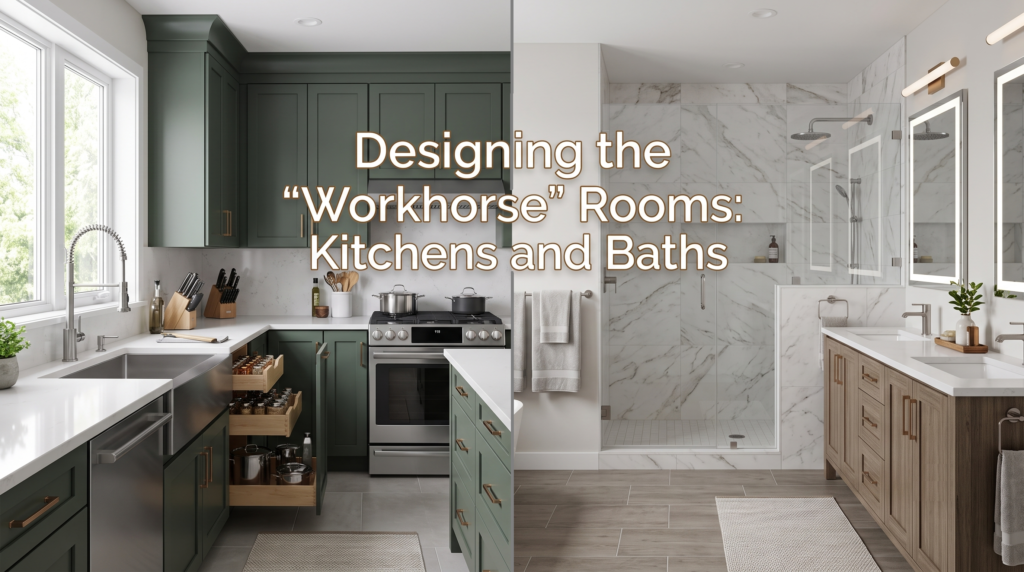
Kitchens and bathrooms are the hardest rooms to balance because they are highly task-oriented spaces. If a kitchen is poorly designed, cooking becomes a chore; if a bathroom lacks storage, it quickly becomes cluttered.
The Kitchen: The “Working Triangle” Meets Luxury Aesthetics
The golden rule of kitchen design is the Working Triangle—the path between your refrigerator, sink, and stove.
- The Function: Keep this path clear of obstructions (like massive island corners) to make meal prep efficient.
- The Style: Turn the island into a design anchor. Use a contrasting cabinet color (like a deep navy or forest green against perimeter white cabinets) and top it with statement pendant lights. This keeps the workspace highly functional while drawing the eye to a gorgeous focal point.
                  [ Cooktop / Stove ]
                         /\
                        /  \
                       /    \
                      /      \
    [ Refrigerator ] /________\ [ Sink ]
The Bathroom: Hidden Power and Recessed Niches
Bathrooms are naturally small, making clutter highly visible.
- Recessed Shower Niches: Instead of hanging plastic caddies over your shower head, build a recessed tiled niche directly into the wall. It keeps your soaps and shampoos organized while offering an opportunity to use a beautiful accent tile.
- In-Drawer Power Outlets: Keep hair dryers, curling irons, and electric toothbrushes plugged in and hidden away by installing power strips inside vanity drawers. Your countertops stay completely clean and styled, but your tools are always ready to use.
5. Built-In Storage: The Invisible Savior of Style
The greatest enemy of a beautiful interior is clutter. No matter how expensive your furniture is, piles of mail, stray toys, and loose cords will ruin the aesthetic.
The secret to a styled home is smart, closed storage.
- Built-In Mudrooms: A drop zone near the entryway with closed lockers or cabinets ensures coats, backpacks, and muddy shoes have a functional home. When the doors are closed, your entryway looks pristine.
- The “Secret” Pantry: If you love the clean look of open kitchen shelving but actually need space for cereal boxes and canned goods, consider a hidden walk-in pantry or a tall cabinet with pull-out drawers. This allows you to display beautiful ceramic plates on your open shelves while keeping the ugly-but-necessary grocery items out of sight.
- Dual-Purpose Furniture: Look for storage ottomans, bed frames with built-in under-bed drawers, and coffee tables with hidden compartments.
6. Layered Lighting: The Ultimate Bridge
Lighting is the ultimate tool for balancing style and utility because it serves both physical and psychological purposes. To get it right, you must use layered lighting:
- Ambient Lighting (General): This is your main overhead light source (like recessed ceiling lights). It serves the purely functional purpose of illuminating the room so you can see where you are going.
- Task Lighting (Specific): This is direct, focused light used for specific activities. Examples include under-cabinet LED strips in the kitchen for chopping vegetables, or a sleek brass reading lamp next to an armchair.
- Accent Lighting (Aesthetic): This is light used purely for styling. Think of picture lights illuminating artwork, or soft LED strip lights glowing underneath floating bathroom vanities. It adds depth, warmth, and drama to a room.
By placing all of these layers on separate dimmer switches, you can instantly transition a space from a bright, highly functional daytime workspace to a cozy, beautifully styled evening sanctuary.
Conclusion: Designing for the Life You Live
When balancing function and style, the most important design element to consider is your lifestyle.
If you have toddlers and pets, an ultra-minimalist, white-on-white living room with sharp glass tables is not functional—and because it will constantly be dirty or stressful to maintain, it will quickly lose its style. Instead, a warm modern farmhouse aesthetic with durable leather sofas, round wooden tables, and plenty of closed toy storage will look stunning and handle daily life with ease.
Never apologize for needing your home to be usable. Embrace your daily habits, plan for your storage needs, choose materials that can take a beating, and then wrap those practical choices in colors, textures, and shapes that bring you joy. That is the true art of design.
Conclusion: Designing for the Life You Live