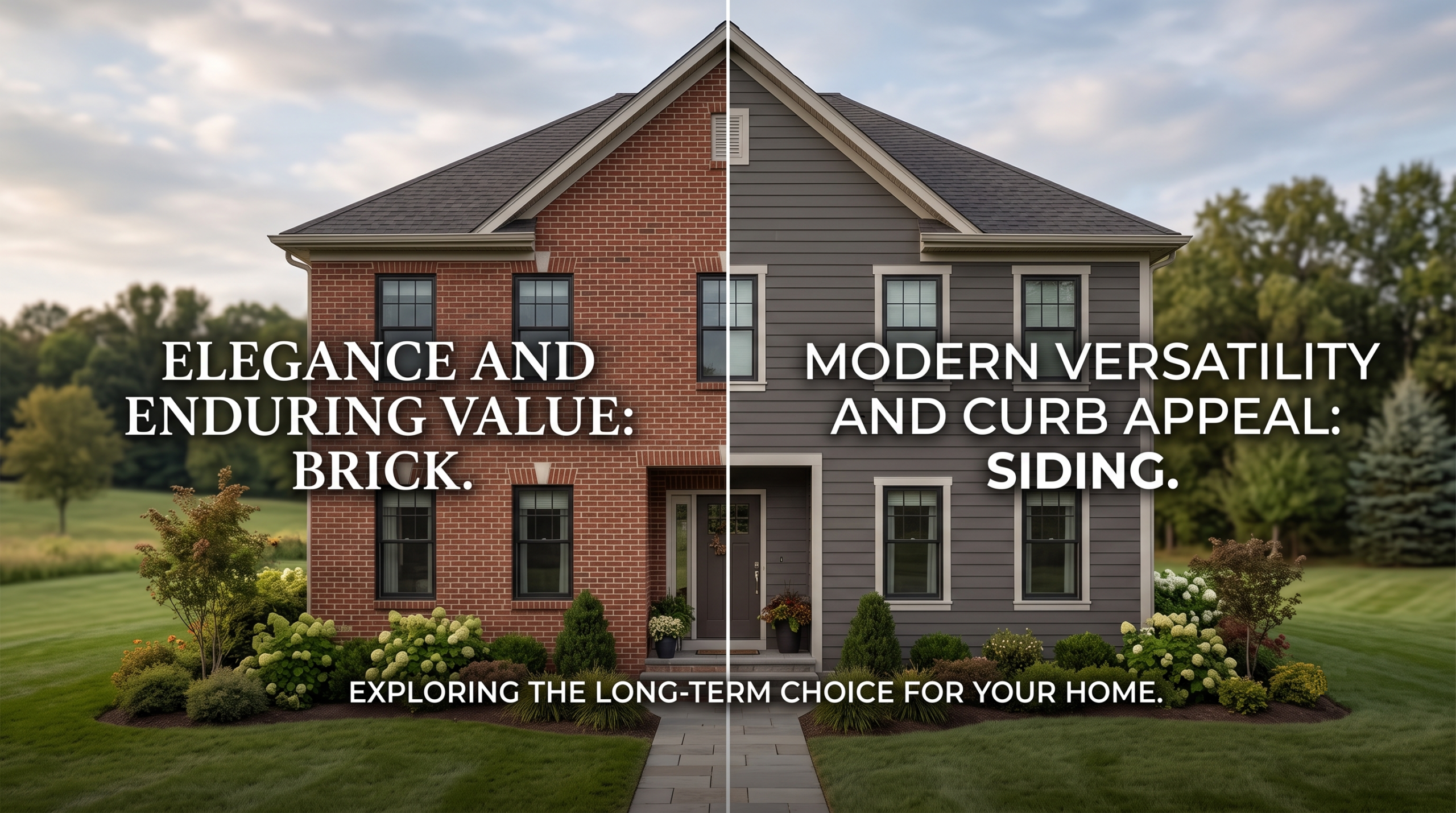

Choosing between a brick and siding exterior is one of the biggest decisions you can make for your home’s long-term value, durability, and curb appeal. Both materials offer distinct advantages depending on your budget, maintenance preferences, and architectural goals.
Here is a breakdown of how brick and siding compare across key categories to help you determine which offers the best fit for your project.
What you need to know about Brick and Siding:
1. Long-Term Value and ROI
When it comes to pure property valuation and return on investment (ROI), brick holds a distinct edge.
- Appraisal Value: Homes with brick exteriors consistently command higher resale values. Appraisers and buyers view brick as a premium, permanent material.
- Insurance Savings: Because brick is non-combustible and highly resistant to severe weather, homeowners insurance premiums are often significantly lower compared to wood or vinyl siding.
- Depreciation: Siding materials (especially vinyl or wood) have a clear lifespan and depreciate as they age, fade, or require replacement. Brick essentially lasts the lifetime of the structure without losing its core value.
2. Aesthetics and Elegance
Elegance is subjective, but the two materials project very different architectural vibes.
- Brick (Timeless Luxury): Brick delivers an immediate sense of permanence, warmth, and prestige. It is highly versatile, fitting seamlessly into traditional, colonial, Tudor, or ultra-modern industrial designs. The natural texture and variation in brick tones provide a depth that synthetic materials struggle to replicate.
- Siding (Modern Versatility): Modern premium siding options—such as fiber cement (James Hardie) or engineered wood—offer incredible design flexibility. You can achieve clean, crisp lines, contemporary vertical board-and-batten styles, or a classic coastal aesthetic. While standard vinyl can sometimes look cheap, high-end siding can look exceptionally sharp and sophisticated.
3. Maintenance and Durability
The true cost of an exterior material is realized in its upkeep over 10 to 30 years.
- Brick: Virtually maintenance-free. It doesn’t need to be painted, it won’t rot, termites can’t eat it, and it won’t dent. The only long-term maintenance required is checking the mortar joints every 20 to 30 years for “repointing” (repairing worn mortar).
- Siding: Maintenance depends entirely on the type of siding:
- Vinyl: Requires regular pressure washing to remove mold and can crack in extreme cold or warp in extreme heat.
- Wood: High maintenance; requires repainting or sealing every 3 to 5 years to prevent rot and insect damage.
- Fiber Cement: Highly durable and rot-resistant, but still requires repainting every 10 to 15 years.
4. Cost Comparison
The superior long-term benefits of brick come with a higher upfront investment.
| Feature | Brick Exterior | Premium Siding (Fiber Cement / Wood) |
| Upfront Installation Cost | High (Requires skilled masonry labor) | Moderate to High |
| Material Lifespan | 100+ Years | 20 to 50 Years (Depending on material) |
| Lifetime Maintenance Cost | Extremely Low | Moderate to High (Painting/Repairs) |
The Verdict: Which Offers the Best Balance? Between Brick and Siding
If your priority is maximum long-term financial value, zero maintenance, and a classic, prestigious aesthetic, Brick is the clear winner. The high upfront cost pays for itself through increased home equity, lower insurance, and zero upkeep.
If your priority is design flexibility, lower upfront costs, and clean, contemporary architectural lines, a premium Siding (like fiber cement) is an excellent alternative that still offers great durability and modern elegance without the massive initial price tag of masonry.
To dive deeper into the brick vs. siding decision, let’s look at the specific practical factors that impact daily living, design flexibility, and installation realities.
Here is a closer look at how these materials perform under the hood.
1. Energy Efficiency and Insulation
The exterior of your home plays a massive role in your monthly utility bills.
- Brick (Thermal Mass): Brick is a dense material with high “thermal mass.” This means it absorbs heat during the day and slowly releases it at night. In hot weather, it keeps the heat outside; in cold weather, it traps heat inside. While brick itself has a low R-value (insulation rating), the air gap between the brick veneer and the home’s framing acts as an extra thermal barrier.
- Siding (Insulation Integration): Siding materials themselves have very little insulating value. However, vinyl and fiber cement siding can easily be paired with insulated foam backing during installation. Insulated siding creates a continuous blanket around your home’s framing, which stops “thermal bridging” (heat escaping through the wooden studs) incredibly well.
2. Design Flexibility and Customization of Brick and Siding
If you want a highly customized, specific architectural look, the choice between these two shifts dramatically.
- The Siding Advantage (Color and Texture): Siding completely wins on color variety and design versatility. If you choose fiber cement or engineered wood, you can paint your home literally any color. If you want to change your home’s look in 10 years, you just repaint it. You can also mix types—using horizontal lap siding on the main body and vertical board-and-batten or shingle siding on the gables for a dynamic, modern look.
- The Brick Reality (Permanent Character): Brick colors and textures are baked into the clay permanently. While you get gorgeous natural variations in tones, your choice is permanent. While painting brick is a massive design trend, it is highly controversial because it turns a zero-maintenance material into a high-maintenance one (as the paint will eventually peel and require scraping and repainting).
3. Structural Weight and Installation Limits
How your home is physically built determines whether brick is even a viable option.
- Brick Needs Structural Support: True brick exteriors (even brick veneer) are incredibly heavy. They require a reinforced concrete foundation ledge specifically designed to bear that immense weight. If you are remodeling an existing home that currently has siding, switching to full brick is often structurally impossible or cost-prohibitive because the foundation isn’t built for it.
- Siding is Lightweight and Adaptable: Siding is exceptionally lightweight. It hangs directly on the home’s exterior wall framing. This makes it perfect for quick renovations, additions, or structural designs where adding tons of masonry weight isn’t feasible.
4. Performance of Brick and Siding in Extreme Weather
Depending on where a home is built, the elements will test these materials differently.
- Moisture and Rot: Brick naturally breathes and dries out well, assuming the installer included proper “weep holes” at the bottom of the walls to let moisture escape. Wood siding is highly prone to rot if moisture gets behind it. Fiber cement handles moisture perfectly and will not rot.
- Storms and Impact: Brick can easily withstand flying debris from high winds, hail, and minor impacts without a scratch. Vinyl siding can crack under heavy hail or shatter if hit by a stray rock from a lawnmower. Fiber cement offers excellent impact resistance, sitting comfortably between vinyl and brick.
The Hybrid Approach: The Best of Both Worlds
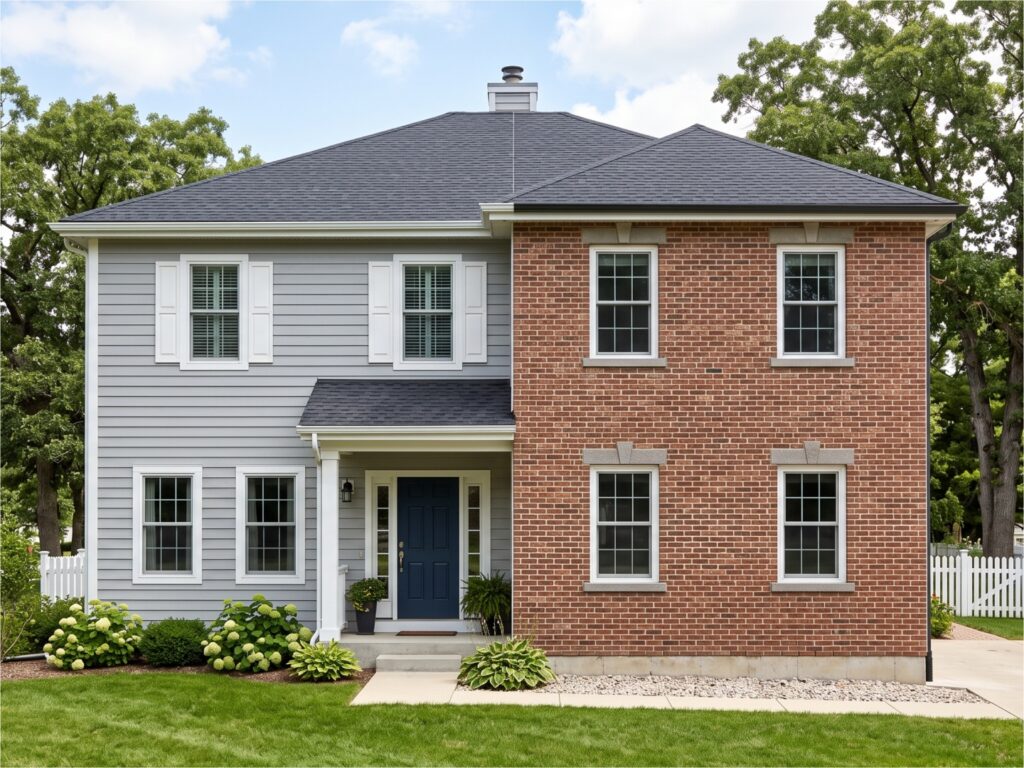
Many modern custom homes bypass the “either/or” debate entirely by using a hybrid approach.
By using brick for the first floor or the front facade and a premium siding (like fiber cement) for the upper levels, gables, or accent walls, you get the heavy-duty durability and premium curb appeal of brick right where people see it most, combined with the cost savings, color flexibility, and modern design lines of siding up top.