

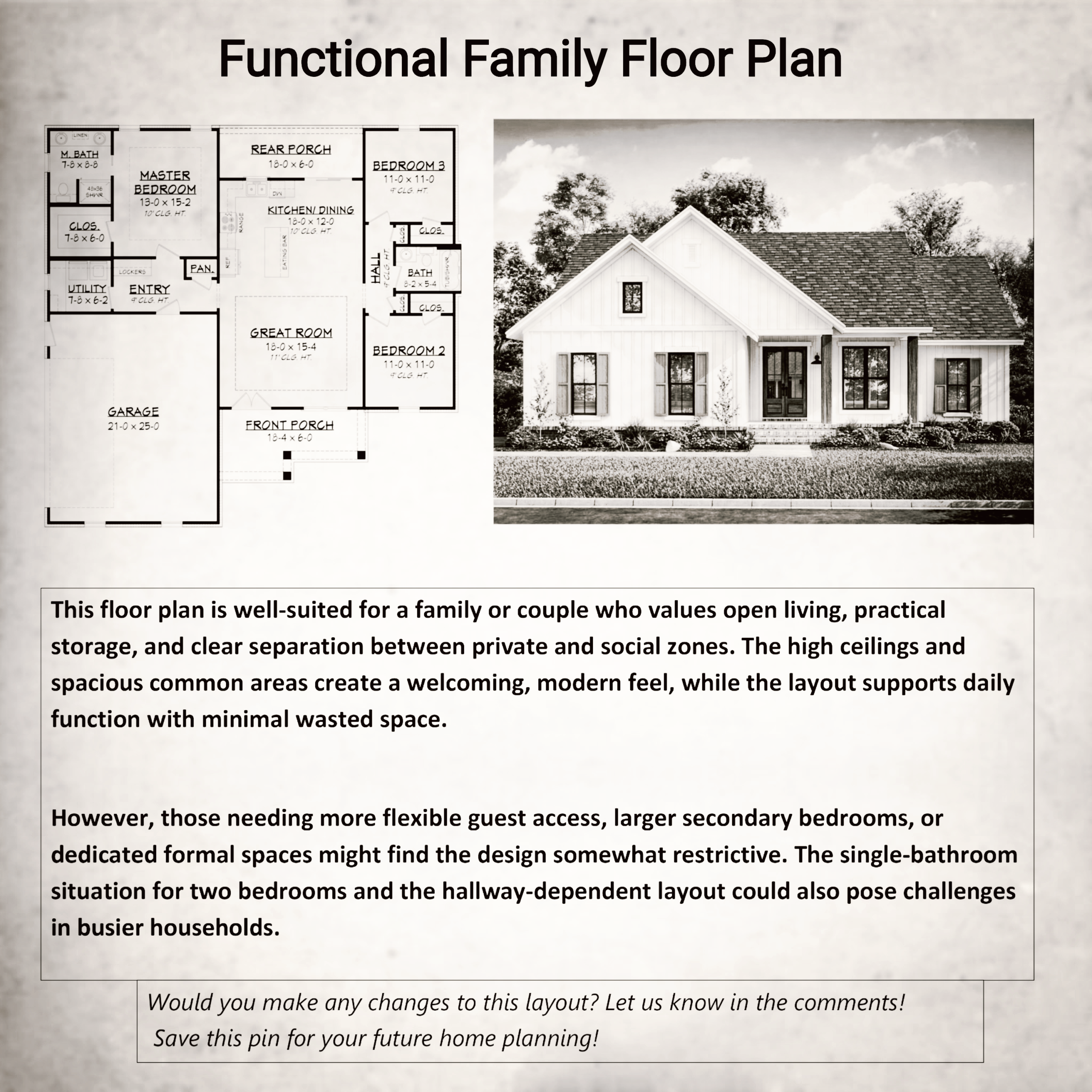
Here’s a detailed analysis of the stunning functional family floor plan shown, breaking down what makes it a comfortable, practical home for many—and where it might fall short for certain lifestyles.
✅ Advantages: Why This Layout Works Well
1. Clear Zoning & Separation of Spaces
-
Private vs. Social Areas: The three bedrooms are grouped together on one side, separated from the social spaces (Great Room, Kitchen/Dining), offering privacy and quiet for rest.
-
Utility Placement: The utility room is strategically located near the kitchen and rear porch, making laundry and storage access convenient without intruding on living areas.
2. Spacious & Airy Common Areas
-
Great Room (18’0″ × 15’4″ with 11′ ceiling): A large, high-ceilinged gathering space ideal for family time and entertaining.
-
Kitchen/Dining (18’0″ × 12’0″ with 10′ ceiling): Open and expansive, perfect for meals and hosting, with plenty of room for a dining table and kitchen island.
-
High Ceilings: Most areas feature 9–11 foot ceilings, creating an open, elevated feel.
3. Practical Storage & Layout
-
Ample Closets: Each bedroom has a dedicated closet, and there are additional closets in the hall and utility area.
-
Mudroom Flow: The rear porch leads directly into the utility room, which connects to the kitchen—ideal for bringing in groceries or dealing with outdoor mess.
-
Garage Access: The garage enters into a small hallway with lockers, helping to contain clutter before entering the main house.
4. Outdoor Connectivity
-
Covered Porches: Both front (18’4″ × 6’0″) and rear (18’0″ × 6’0″) porches provide sheltered outdoor space for relaxing or entry.
-
Easy Access to Garage: The large garage (21’0″ × 25’0″) offers plenty of space for vehicles and storage, with direct entry into the home.
5. Master Suite Privacy
-
Secluded Master Bedroom (13’0″ × 15’2″ with 10′ ceiling): Located away from other bedrooms for added privacy, with its own bath and walk-in closet.
❌ Disadvantages & Considerations
1. Limited Bedroom 3 Size
-
Bedroom 3 (11’0″ × 11’0″): While adequate, it’s the smallest bedroom and may feel cramped if used as a primary children’s room or home office.
2. Single-Corridor Layout
-
Hallway Dependency: All bedrooms are accessed via a single hallway, which can become a bottleneck in a busy household and lacks architectural interest.
3. Bathroom Access
-
Shared Bath Placement: The main bathroom is accessible only via the hallway and serves Bedrooms 2 and 3. Guests must enter the bedroom hallway to use it, which may reduce privacy.
4. Potential Noise Transfer
-
Great Room Adjacency: The Great Room shares a wall with Bedroom 2, so noise from TV or gatherings could disturb occupants if not well-insulated.
5. Formal Dining Limitation
-
Combined Kitchen/Dining: While open, there’s no separate formal dining room, which may not suit those who entertain frequently or prefer defined meal spaces.
6. Porch Size
-
Narrow Porches: Both porches are only 6 feet deep, which may limit furniture arrangements and comfortable outdoor lounging.
🏡 Final Verdict For This Functional Family Floor Plan
This floor plan is well-suited for a family or couple who values open living, practical storage, and clear separation between private and social zones. The high ceilings and spacious common areas create a welcoming, modern feel, while the layout supports daily function with minimal wasted space.
However, those needing more flexible guest access, larger secondary bedrooms, or dedicated formal spaces might find the design somewhat restrictive. The single-bathroom situation for two bedrooms and the hallway-dependent layout could also pose challenges in busier households.
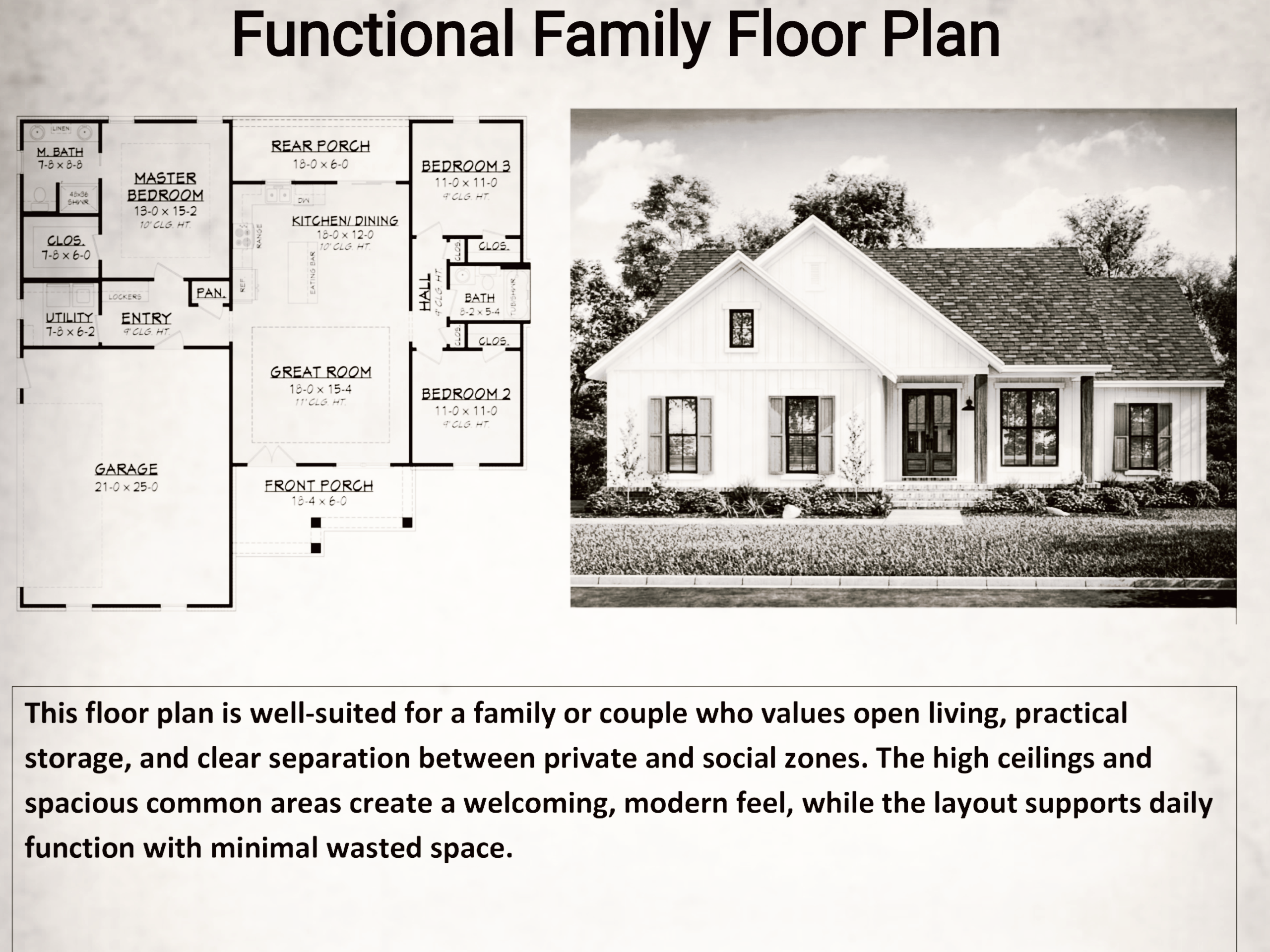
Estimating the cost to build this house in New York State is challenging without specifics like exact location, material choices, and labor rates, but I can give you a detailed range based on current construction costs and regional factors.
– Jerry house design
🏗️ Estimated Cost to Build This House in New York State
Total Square Footage (Approximate):
-
Living Area: ~1,800–2,000 sq ft (based on room dimensions provided)
-
Garage: ~525 sq ft (21′ × 25′)
-
Porches (Covered): ~216 sq ft (combined)
Cost per Square Foot in New York:
Construction costs vary widely across the state. Here’s a breakdown by region:
| Region | Cost per Sq Ft (Mid-Range Finish) | Estimated Total Cost (Living Area Only) |
|---|---|---|
| Upstate / Rural NY | $180 – $250 | $324,000 – $500,000 |
| Suburban (e.g., Hudson Valley) | $250 – $350 | $450,000 – $700,000 |
| NYC Metro / Long Island | $350 – $500+ | $630,000 – $1,000,000+ |
Garage & Porches:
-
Detached garage: $40,000 – $80,000+
-
Covered porches: $15,000 – $30,000
📋 Breakdown of Major Cost Factors
1. Location & Land Costs
-
Upstate NY: Land is relatively affordable ($30,000 – $150,000)
-
Suburban / Metro Areas: Land can range from $100,000 – $500,000+
-
Site Work: Clearing, grading, utilities, septic vs. sewer—can add $20,000 – $100,000
2. Materials & Finishes
-
Economy: Basic finishes, vinyl siding, laminate counters → lower end of sq ft range
-
Mid-Range: Hardwood floors, granite, upgraded fixtures → mid-range
-
High-End: Custom cabinets, premium siding, energy-efficient windows → top end
3. Labor Costs
-
Higher in metro areas due to union labor, demand, and cost of living
-
Can account for 40–60% of total construction cost
4. Permits & Fees
-
Vary by county/township
-
Impact fees, school taxes, utility hookups can add $10,000 – $50,000
5. Additional Costs Often Overlooked
-
Architecture/engineering fees: 5–15% of build cost
-
Landscaping & driveway: $15,000 – $50,000
-
Contingency fund (recommended): 10–20% of budget
💰 Estimated Total Build Cost (Including Land) For This Functional Family Floor Plan
| Scenario | Upstate / Rural NY | Suburban NY | NYC Metro / LI |
|---|---|---|---|
| Land + Basic Build | $400,000 – $650,000 | $700,000 – $1.2M | $1.2M – $2M+ |
| Land + Mid-Range Build | $500,000 – $850,000 | $900,000 – $1.5M | $1.5M – $2.5M+ |
| Land + High-End Build | $700,000 – $1.2M | $1.2M – $2M | $2M – $3.5M+ |
⚠️ Important Notes & Variables
-
Inflation & Market Timing: Construction costs have risen significantly post-pandemic. Prices quoted today may increase 5–15% per year.
-
Customization: This plan is relatively straightforward, but changes (foundation type, roof complexity, interior walls) will affect cost.
-
Energy Efficiency: Adding high-performance insulation, windows, and HVAC can add 10–20% to build cost but saves long-term.
-
Builder Markup: General contractors typically add 15–25% for overhead and profit.
🛠️ Recommendations for Budget Planning
-
Get a Local Builder Quote: Costs can vary even within the same county.
-
Secure Financing Early: Construction loans have different requirements than mortgages.
-
Plan for Overages: Include a 15–20% contingency in your budget.
-
Consider Phasing: Build garage or porches later to manage cash flow.
-
Check Zoning & Codes: NY has strict energy codes (NYS Energy Conservation Code) that can affect design and cost.
📞 Next Steps
If you’re serious about building this plan in NY:
-
Consult a local architect to adapt the plan to NY codes and your site.
-
Reach out to 3–4 builders for preliminary bids.
-
Visit the NY Department of State website for permit and code info.
-
Consider a construction manager if you want more control over costs.